
Hyderabad | PrathipakshamTV Exclusive Report
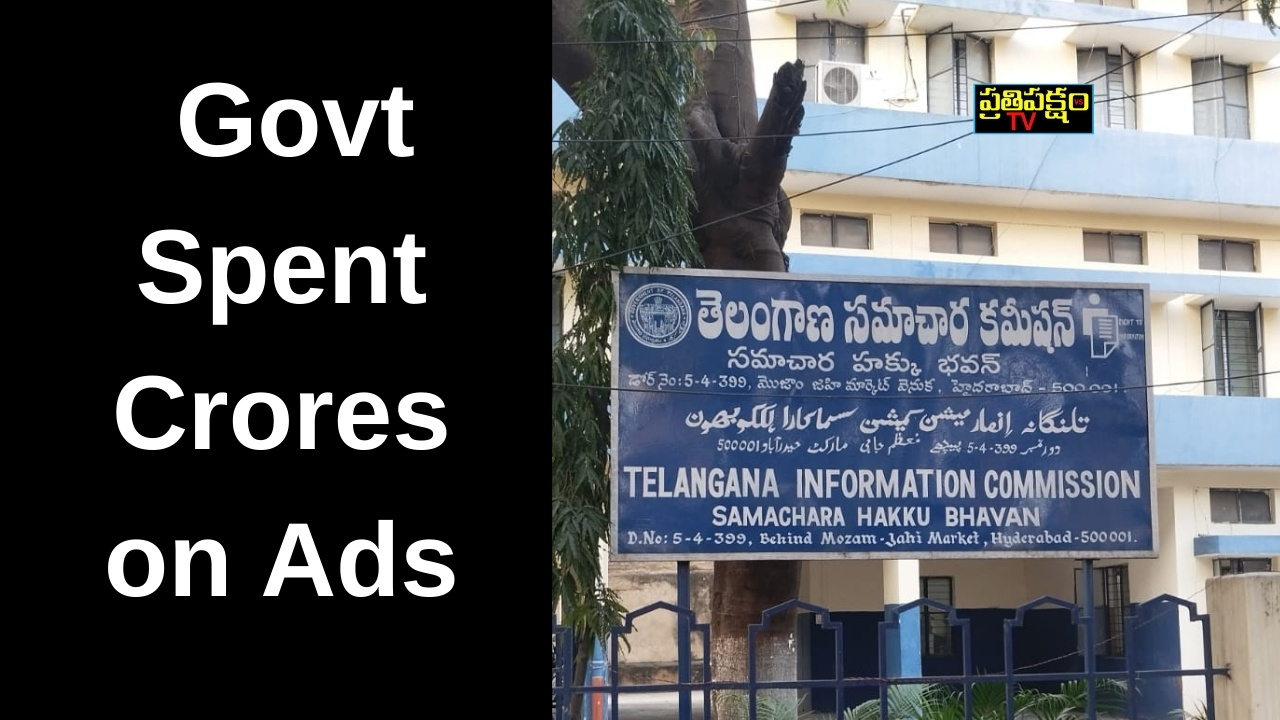
A Right to Information (RTI) request filed by independent journalist and RTI activist Veeramusti Sathish has uncovered significant details about the Telangana Government’s year-wise spending on print media advertisements from 2020 to 2025. The information, furnished by the Department of Information & Public Relations (I&PR), Display Section, provides a rare insight into how public funds were allocated for publicity, awareness campaigns, and government promotions during the last five years.
This exclusive data reveals not only the year-wise totals but also the sharp rise in advertisement expenditure during certain periods — raising questions on transparency, budget priorities, and political timing.
Massive Rise in Advertisement Spending After 2022
According to the I&PR department’s official reply, the Telangana Government spent substantial amounts on print advertising between the financial years 2020–21 and 2025–26 (up to August 28, 2025). The expenditure pattern shows a dramatic jump during 2022–2024.
| Financial Year | Total Amount Spent |
|---|---|
| 2020–2021 | ₹20.10 Cr |
| 2021–2022 | ₹13.22 Cr |
| 2022–2023 | ₹125.94 Cr |
| 2023–2024 | ₹244.22 Cr |
| 2024–2025 | ₹85.19 Cr |
| 2025–2026 (up to Aug 28, 2025) | ₹29.88 Cr |
The figures clearly indicate:
A stable, low expenditure during 2020–2022
A ten-fold increase starting from 2022–23
The highest spending in 2023–24 (₹244 crore)
A dip again in 2024–25 after the elections
This pattern strongly aligns with pre-election campaigns, government program promotions, and large-scale publicity drives.
Which Newspapers Received Payments?
One of the key RTI questions sought the names of:
Newspapers
Magazines
TV channels
Digital media platforms
And details of payments made to each
The I&PR Department responded that the list of empanelled ‘Big & Medium’ newspapers and magazines . However, actual payment specifics were advised to be collected from the Accounts Section, indicating a multi-level data structure maintained within the department.
This opens the door for further RTI follow-up applications to break down:
Which media houses benefited the most?
How much advertising revenue flowed into each newspaper?
Whether the spending pattern changed during election seasons?
Such details can potentially reveal political preferences and media influence dynamics during critical periods.
Government Orders (GOs) on Advertisement Policy Also Released
Along with expenditure data, the I&PR Department attached G.O. Ms. No. 52, an important government order that outlines the rules and policy framework for:
Releasing government advertisements
Eligibility of newspapers
Criteria for empanelment
Rate structure and approvals
This GO is significant for journalists, researchers, legal activists, and media houses studying government-advertising relations and policy transparency.
Why Did Expenditure Spike in 2022–24?
Political analysts suggest multiple reasons:
1. Pre-election Publicity
2022–2023 and 2023–2024 were politically sensitive periods, including:
Welfare scheme promotions
Development project campaigns
Government achievements advertisements
Election-year communication strategies
2. Media Competition
To reach rural, urban, and regional readership, governments typically increase multi-platform publicity efforts.
3. Awareness Programmes
Campaigns related to:
Health
Agriculture
Social welfare
Education
Public safety
were run at a statewide level.
4. Digital–Print Combination
Print media still holds large influence in Telangana, especially regional and language newspapers.
The result: a massive jump in annual advertisement budgets.
RTI: A Powerful Tool for Accountability
This disclosure is a clear example of how the Right to Information Act empowers citizens to:
Track government expenditure
Demand financial transparency
Examine public fund utilisation
Hold authorities accountable
Journalist Veeramusti Sathish’s consistent RTI activism has played a crucial role in bringing such high-value information to the public domain.
Regular RTI users argue that government advertisement spending must always be transparent, as it involves taxpayer money and tends to influence media independence.
Is the Spending Justified? Experts React
Public policy and media experts have varying views:
✔️ Argument for Justification
Government must inform citizens about schemes
Awareness campaigns require mass communication
Print media remains a reliable channel
❌ Argument Against Excessive Spending
₹244 crore in a single year (2023–24) is unusually high
Public money could be used for welfare instead of publicity
Election-linked spending may be politically motivated
The debate continues, especially because these expenditure patterns directly affect political communication and media neutrality.
Why This Information Matters to Every Citizen
Understanding where taxpayers’ money goes is essential in a democracy. This RTI revelation:
Shows budgeting priorities
Highlights election-year publicity patterns
Helps track potential misuse of funds
Ensures transparency in media-government relations
Encourages further citizen journalism and public scrutiny
Conclusion
The RTI response from the Telangana I&PR Department offers a detailed, year-wise breakdown of print media advertisement spending from 2020 to 2025. The sharp surge during 2022–24 raises important questions about publicity budgets and political timing.
This report reinforces the importance of RTI in promoting transparency and accountability within government departments across India.
https://tgic.telangana.gov.in/rtiactreport.do
READ MORE:
Online RTI:తెలంగాణలో ఆర్టీఐ కమీషనర్లు ఖాళీ – సమాచారం లేక ఇబ్బందులు
